This electronic glossary contains key vocabulary and concepts from reading Chapter 2 of the book "Heat Transfer - A Practical Approach" to familiarize yourself with the terminology.
Boundary conditions
noun
Boundary conditions are mathematical expressions of the thermal conditions at the boundary. The temperature distribution in a medium depends on the boundary conditions of the medium as well as the heat transfer mechanism within it.
Example: The boundary conditions most frequently encountered in practice are specific temperature, specific heat flux, convection, and radiation.
es: Condiciones de frontera
Emissivity
noun
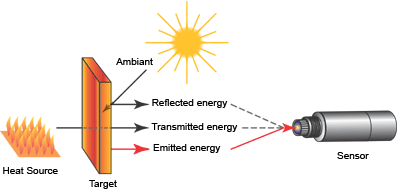
Emissivity is the measurement of an object's ability to emit infrared energy. The emissivity value is calculated by the proportion of thermal radiation emitted by a surface or object due to a temperature difference with its surroundings.
Example: A sheet of metal does not have the same emissivity as a piece of wood. When exposed to the sun for 2 hours, which one do you think will emit more thermal radiation? Which one will emit more heat? The metal plate.
es: Emisividad
Energy balance
phrase
An energy balance is an accounting of the contributions and energy consumption by a system to be studied. It is about knowing the changes in the energy level of a system.
Example: The energy balance has several important applications, among which we can highlight: Recover and effectively use heat and calculate the amount of energy required for a system.
es: Balance de energía
Heat conduction equation
phrase
The heat conduction equation is a partial differential equation that describes the distribution of heat (or the temperature field) in a given body over time.
Example: The heat equation is of fundamental importance in many different fields of science.
es: Ecuación de conducción de calor
Heat flux
phrase
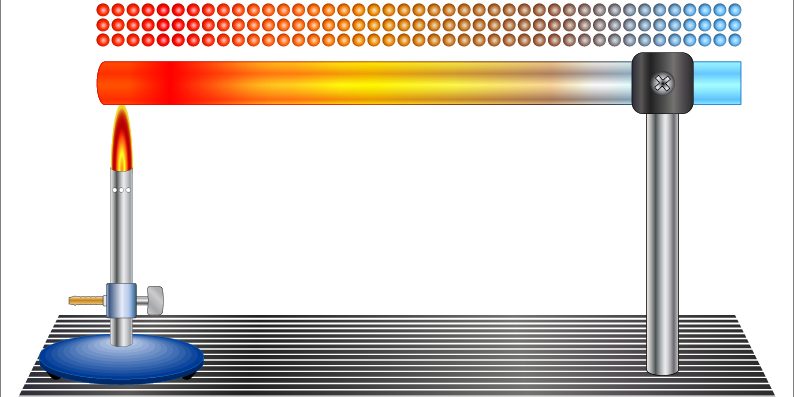
Heat flow is the measure of energy transfer, which is caused by a temperature difference and leads to temperature equilibrium between substances. In this context, the energy is called heat.
Example: In engineering the heat flow rate is necessary for the calculation of heat losses, for the design of heat exchangers and for the determination of energy requirements for cooling and heating.
es: Flujo de calor
Heat generation
phrase
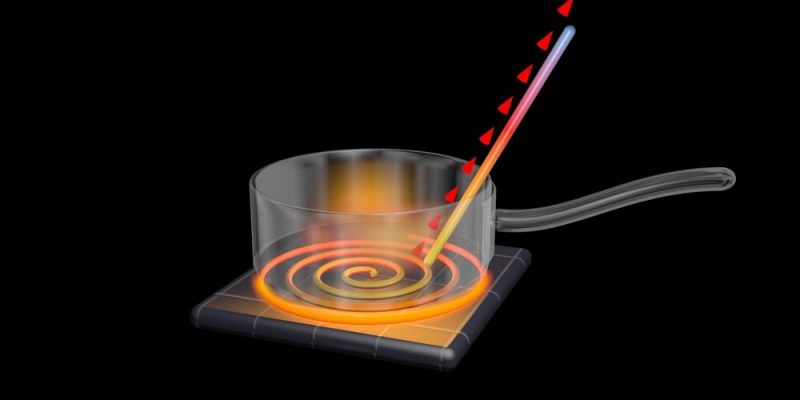
Heat generation is called the transformation of some form of energy into thermal energy, be it electrical by resistance of wire, exothermic chemical reactions in a solid and nuclear reactions in nuclear fuel rods.
Example: The temperature of a medium rises during the generation of heat, as a result of the absorption of the heat generated by the medium during the transitory period of start-up.
es: Generación de calor
Initial condition
phrase
These are the properties of the system to be studied at the beginning of the process or at the instant where t = 0.
Example: For this, the initial condition is established, a mathematical expression for the initial temperature distribution of the medium.
es: Condición inicial
Insulation
noun
Thermal insulation is the ability of materials to resist the passage of heat by conduction.
Example: Insulation systems are essential to reduce economic losses in industrial equipment and pipes.
es: Aislamiento
Internal energy
phrase
The internal energy is the result of the contribution of the kinetic energy of the molecules or atoms that constitute it, of their energies of rotation, translation and vibration, in addition to the intermolecular potential energy due to the forces of gravitational, electromagnetic and nuclear type.
Example: A glass of warm water has less internal energy than a lake at room temperature, even though the temperature of the glass is higher, and this is because there is more water in the lake than in the glass.
es: Energía interna
Specific heat
noun
Specific heat is a physical quantity that is defined as the amount of heat that must be supplied to a unit mass of a substance or thermodynamic system to raise its temperature by one unit.
Example: The higher the specific heat of substances, the more heat energy is needed to increase the temperature.
es: Calor específico
Stefan-Boltzmann Law
phrase
This law tells us that the rate of radiation heat transfer, q [W / m 2], from a body (for example, a black body) to its surroundings is proportional to the fourth power of the absolute temperature.
Example: As written, the Stefan-Boltzmann law gives the radiant intensity of a single object. But using the Stefan-Boltzmann law, we can also determine the radiation heat transfer between two objects.
es: Ley Stefan-Boltzmann
Thermal conductivity
noun
Thermal conductivity is a physical property of materials that measures heat conduction capacity.
Example: The higher its thermal conductivity, the better a material conducts heat. The smaller it is, the more insulating the material.
es: Conductividad térmica
Thermal conductivity coefficient
phrase
The Conductivity Coefficient is a characteristic of each substance and expresses the magnitude of its ability to conduct heat, it is symbolized by the letter λ
Example: The coefficient of thermal conductivity varies with the conditions of the material, mainly the moisture it contains and the temperature at which the measurement is made.
es: Coeficiente de conductividad térmica
Thermal diffusivity
phrase
It is an index that expresses the rate of change, and temperature flux, in a material until it reaches thermal equilibrium.
Example: To predict cooling processes or to simulate temperature fields, Thermal Diffusivity must be known.
es: Difusividad térmica
Thermal symmetry
phrase
It occurs as a result of symmetry in imposed thermal conditions.
Example: This case occurs when both sides of the wall are exposed to the same thermal conditions and therefore the temperature distribution in either half will be the same as the other. That is, the heat transfer in the two plates will have thermal symmetry.